

2025-12-13
GDPR and APPI in Erasure Operations | Retention, Deletion Requests, Vendor Control
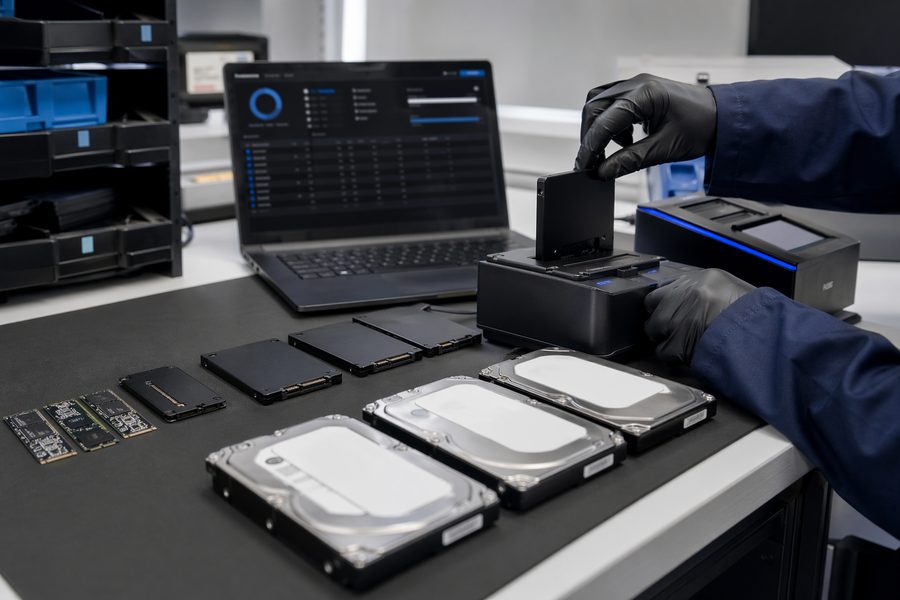
Data erasure is not only a technical or housekeeping task. Under GDPR and Japan's APPI, the operational challenge is to avoid keeping unnecessary personal data, protect what you do keep, and make deletion or disposal explainable. This page focuses on practical workflow design, not legal conclusions for specific cases.
This page is general operational guidance, not legal advice
Retention duties, deletion requests, cross-border scenarios, and sector-specific obligations vary by context. Final conclusions should be checked against primary sources and qualified counsel. The goal here is to clarify what enterprise erasure operations usually need in order to stay explainable and controlled.
The questions teams are actually asked
Holding personal data longer than needed creates governance risk and weakens accountability.
Manual decisions without a defined workflow are prone to inconsistency and missing records.
The risk does not end when the data is in a processor or subcontractor environment.
Later questions usually focus on what was done, by whom, when, and to which device or record set.
What GDPR means in operational terms
| Topic | Operational meaning | What the workflow needs |
|---|---|---|
| Data minimization | Do not collect or keep more personal data than necessary | Clear ownership, narrower datasets, and justified retention scope |
| Storage limitation | Do not retain data beyond the justified purpose window | Retention rules, deletion triggers, and review points |
| Right to erasure | Requests need a structured response path, not ad hoc handling | Exception checks, execution status, and decision records |
| Security and accountability | Protection and proof both matter | Logs, operator traceability, and searchable case history |
What APPI adds to the operational picture
Teams need organizational, human, physical, and technical controls, not only a deletion function.
PPC guidance gives examples around hard-to-recover deletion methods, responsible confirmation, and keeping records of deletion or disposal.
PPC guidance also emphasizes appropriate processor selection, contract design, and visibility into handling status.
Teams should know where personal data goes, who handles it, and where erasure responsibility sits across the chain.
The real control point is decision history plus execution history
Most operational failures are not about the erase command itself. They happen when nobody can later explain why retention continued, why deletion was blocked, which assets were processed, or whether a vendor actually completed the work. The answer is a workflow that links policy decisions to execution evidence.
Minimum checklist for a controllable erasure workflow
- Define retention: specify purpose, owner, retention window, and exceptions by data category.
- Define deletion request handling: intake, review, exception check, execution, and record keeping.
- Separate by media and system: do not treat laptops, mobile devices, removable media, and backend systems as one class.
- Control vendors: review selection, contract terms, audit rights, and re-subcontracting visibility.
- Keep evidence: retain identifiers, method, timestamp, operator, certificate, and case history.
How to evaluate MASAMUNE in this context
You need more than a one-off output. You need a record you can retrieve later by asset or case.
A PDF is stronger when it is backed by actual device and operator history.
Resale, return, and audit-focused workflows are easier to govern when they share the same evidence model.
Structured logs and certificates make it easier to answer partners, auditors, and internal stakeholders.
Translate policy into evidence-ready erasure operations
Retention policy alone is not enough. The practical win comes from deciding how assets are processed, how exceptions are tracked, and how evidence is retained across the full workflow.
Frequently asked questions
Q. Can a company keep personal data indefinitely if it might be useful later?
In general, teams should avoid keeping personal data longer than justified by purpose, policy, and applicable obligations. Defined retention and deletion workflows are safer than open-ended storage.
Q. Is a deletion request workflow only a legal review issue?
No. It also needs an operational process that records the request, checks exceptions, executes the deletion or alternative action, and keeps evidence of what was done.
Q. Do vendor and processor workflows matter for erasure compliance?
Yes. Governance does not stop at your internal system. Vendor selection, contract terms, supervision, and status checks are part of a defensible erasure workflow.