

2025-12-13
How to Use NIST SP 800-88 Rev. 2 in Real Operations | Clear, Purge, Destroy
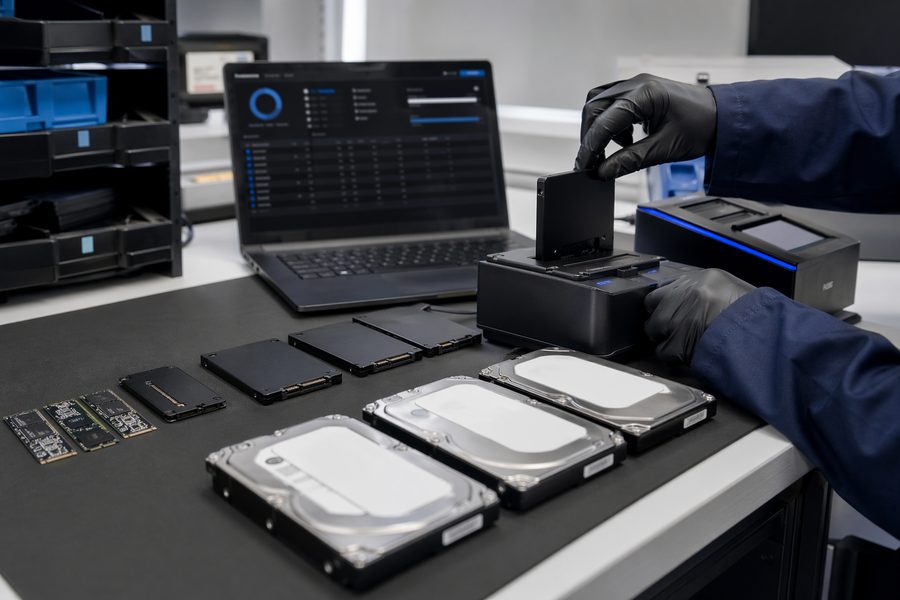
NIST SP 800-88 is not only a technical reference for erase methods. It is a decision framework for choosing an appropriate sanitization level, closing the workflow for reuse, return, or disposal, and retaining enough evidence to explain the result later. With Rev. 2, released in September 2025, that program-level perspective became even more explicit.
What teams should keep in mind when using this standard
You are not only cleaning a device. You are choosing a level that stands up to external handoff.
Lease return and vendor workflows often require a defensible record, not just a completed task.
HDDs, SSDs, and mobile devices do not behave the same, so policy cannot treat them as identical.
The real question is whether you can reconstruct the case later, not whether you remember the label.
Rev. 2 shifts the conversation toward program design
NIST released SP 800-88 Rev. 2 in September 2025. Many teams still use the familiar Clear / Purge / Destroy vocabulary, but Rev. 2 places stronger emphasis on the enterprise media sanitization program around those decisions. In practice, that means linking method selection to media characteristics, governance rules, and evidence retention.
How to interpret Clear, Purge, and Destroy
| Level | Operational meaning | Best fit | Common caution |
|---|---|---|---|
| Clear | Reduce recoverability against common software recovery scenarios | Internal reuse and more controlled environments | A mismatched method can create a false sense of completion |
| Purge | Apply a stronger media-appropriate approach for external handoff risk | Resale, external transfer, lease return, sensitive data handling | SSD and encryption assumptions need explicit review |
| Destroy | Make reuse irrelevant by destroying the media or its practical utility | Final disposal and highly sensitive cases | Chain of custody and evidence may matter as much as the act itself |
Where teams often get the decision wrong
The label alone does not guarantee the right result for the actual media and implementation context.
Your internal threshold may still fall short of partner, vendor, or lease evidence requirements.
Certificate-only workflows are weaker when device identity and operator history are not already linked.
Standards and accepted practices move, so policies need periodic review against the latest published guidance.
Minimum checklist for an audit-ready workflow
- Classify the media: do not treat HDD, SSD, mobile, and removable media as one class.
- Classify the outcome: distinguish internal reuse, resale, return, and disposal.
- Choose the level deliberately: align Clear, Purge, or Destroy with internal policy and external conditions.
- Record the execution: retain device identifiers, timestamp, operator, method, and outcome.
- Close the case: make certificates, logs, and asset history searchable after handoff.
The real evaluation point is not the label. It is whether the workflow closes cleanly.
In enterprise operations, value comes from connecting the decision, the execution, and the evidence. If resale, ITAD, and audit-heavy teams can all work from the same operational base, the NIST vocabulary becomes actionable instead of theoretical.
Review the evidence workflow, not only the sanitization label
The fastest way to evaluate fit is to check how the decision standard connects to logs, certificates, and case history across your actual workflows.
Frequently asked questions
Q. Do Clear / Purge / Destroy map directly to an enterprise policy?
They are useful decision labels, but final policy still depends on media type, encryption state, external return conditions, and internal governance requirements.
Q. What changed in NIST SP 800-88 Rev. 2?
The September 2025 revision puts more emphasis on building an enterprise media sanitization program, not just memorizing individual techniques.
Q. What matters most for audit readiness?
Audit readiness usually depends on traceable evidence such as device identifiers, timestamps, operators, methods, and case-level history, not just the sanitization label.