

2025-01-25
Secure Erase in SSD and HDD Workflows | When Drive-Level Commands Matter
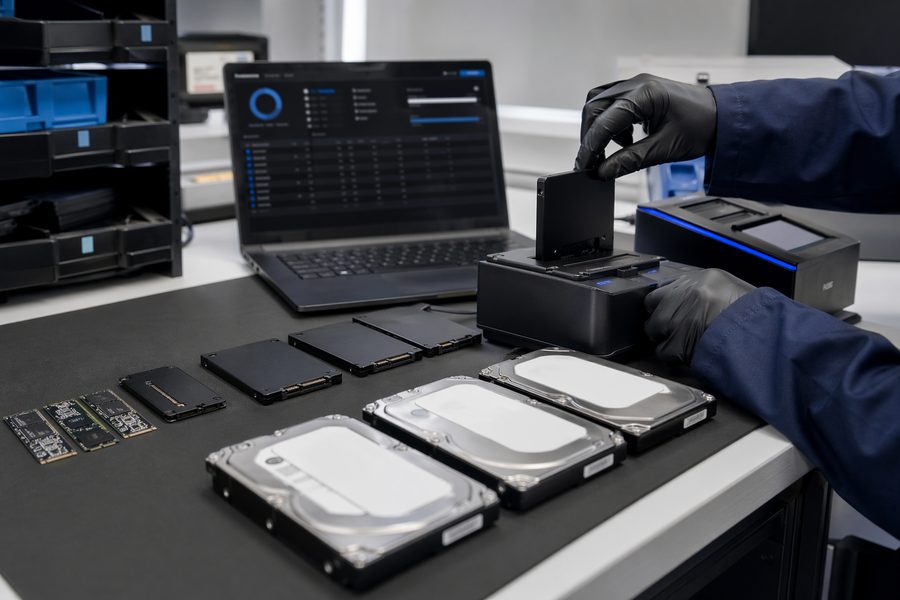
Secure Erase is often treated as a magic phrase in storage sanitization. It is more useful to think of it as one method family inside a broader workflow decision. In SSD-heavy operations especially, controller behavior matters enough that drive-level commands deserve specific attention.
Why teams keep returning to Secure Erase
Controller-managed mapping can make surface overwrite assumptions weaker than expected.
Teams often want a strong sanitization path without immediately destroying the drive.
Drive-level methods are often discussed because teams care about throughput as well as assurance.
The command alone is not enough unless the workflow also records what happened.
Why Secure Erase is especially relevant for SSDs
SSDs use controller logic and wear-leveling behavior that can make a host-side overwrite model less straightforward than many teams assume. This is why drive-level methods receive so much attention in SSD workflows. The exact behavior still depends on device class, implementation, and operational context, so teams should treat Secure Erase as a method to evaluate, not as a universal shortcut.
How to use it as an operational decision
| Question | Why it matters |
|---|---|
| What media are we working with? | SSD, HDD, and NVMe-oriented workflows do not all behave the same. |
| Is reuse required? | Secure Erase is often part of a reuse-friendly decision set. |
| What evidence is required? | Teams may still need logs, certificates, and operator history afterward. |
| What are the compatibility constraints? | Device support, state, and operational prerequisites still shape the final method choice. |
The command is only one part of the answer
Even when Secure Erase is technically appropriate, the workflow is still weak if the team cannot later show which drive was processed, by whom, under which case, and with what result. Operational evidence remains part of the method decision.
When another path may be more appropriate
When the media will not be reused and the organization prefers final disposal.
When encryption state and key management are already central to the workflow.
When the drive type or platform behavior points to another controller-level or policy-aligned choice.
When the organization must optimize traceability and case linkage as much as the erase method.
Evaluate Secure Erase as one method inside a documented workflow
The most practical comparison is usually between media-aware options plus the evidence model that follows them.
Frequently asked questions
Q. Why is Secure Erase discussed so often with SSDs?
Because SSD controller behavior and wear leveling can make simple overwrite assumptions less reliable than many teams expect.
Q. Does Secure Erase automatically solve every sanitization problem?
No. Teams still need the right workflow, device compatibility checks, execution records, and evidence retention.
Q. When should teams consider another method instead?
When the media, controller behavior, reuse plan, or policy requirements point to a different approach such as another drive-level action, cryptographic erase, or destruction.